Characteristics of Highland Cow Breed Characteristics of Highland Cow Beef
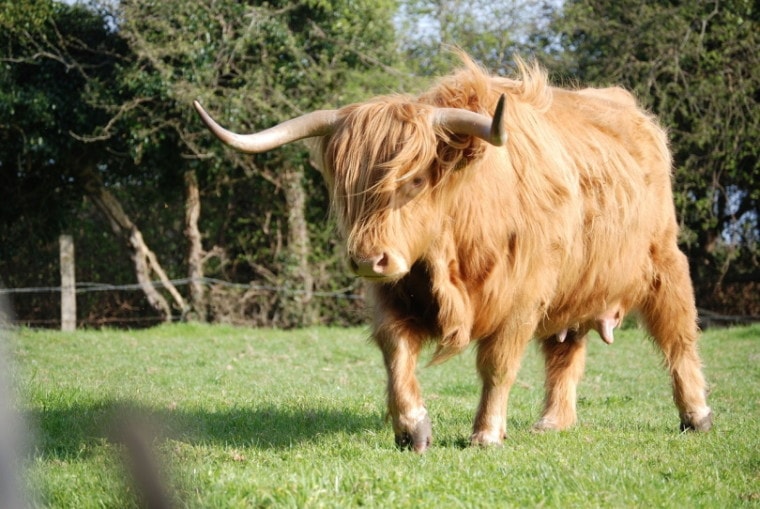
The Highland Cattle breed has a unique await that causes the cow to look rustic and beautiful. Even individuals who are non well versed in the cattle industry ofttimes recognized the Highland Cattle because of its distinctive look, complete with shaggy hair and long horns.
In addition to looking cute, the cattle are known for producing loftier quality beef, though the demand for their beef has been failing over the years. However, many breeders still honey keeping Highlands on manus due to their hardy nature modest stature, especially small calibration farmers.
To learn more most the Highland Cattle brood, keep reading. This article explains the origins, characteristics, and uses of these unique looking cattle.

Quick Facts most Highland Cattle Breed

| Brood Proper name: | Highland Cattle, Bos taurus taurus |
| Place of Origin: | Scotland |
| Uses: | Meat, showing |
| Bull (Male person) Size: | 800 kg, 3.5 – 4 ft |
| Cow (Female) Size: | 600 kg, iii – 3.five ft |
| Color: | Blackness, dun, scarlet, ginger, yellow, white, gray, and silver |
| Lifespan: | 20 years |
| Climate Tolerance: | Hardy, tin can withstand intemperate atmospheric condition |
| Care Level: | Beginner to intermediate |
| Product: | Meat |
| Distributions: | Worldwide, though nearly common in Scotland and the US |
Highland Cattle Breed Origins
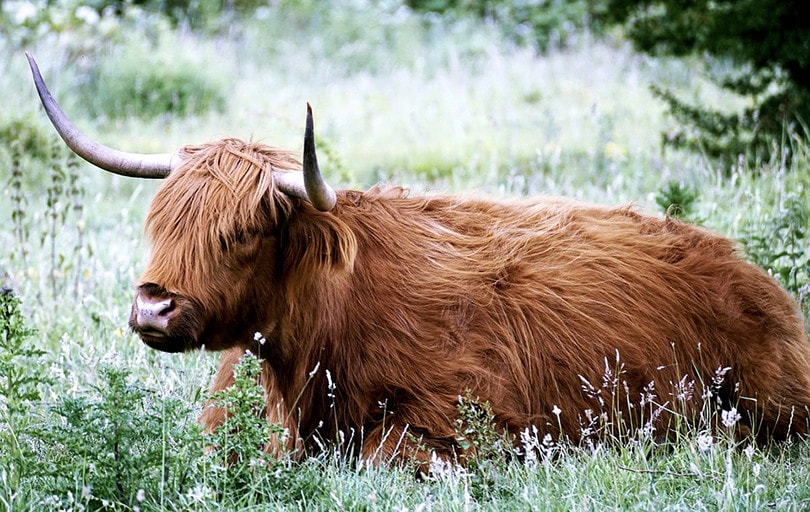
The Highland Cattle brood originated from the Scottish Highlands and the Outer Hebrides, which are islands around the coast of Scotland. Both areas have pretty tough weather, and the cattle evolved to be hardy and resistant to cold and wet weather as a consequence.
It is believed that the Highland Cattle descended from Hamitic Longhorns, which were brought over in the 2d Millennium BCE by Neolithic farmers. Historically, this breed has been of utmost economical importance and were primarily raised on small farms and sold as meat for England.
Because of their Scottish ancestry, the breed also has Scottish Gaelic and Scottish names, which are Bò Ghàidhealach and Hielan Coo, respectively. Another names for this breed include the Long-Haired Highland Cattle, Long-Haired Scotting Cattle, North Highland Cattle, and Scottish Cattle.
Highland Cattle Brood Characteristics
The Highland Cattle breed is hard to overlook or miss. Information technology has long, wired, wavy, and woolly coats. This coat can come in many colors, but the most common are black and dun. The glaze is besides double layered, with the outside being oily.
The long, double coat helps the cattle to stay warm in the coldest of conditions. Besides, the double coat helps to protect the cattle from the rainy conditions common in the area since the oily top helps to wick away the moisture.
Highland Cattle have extremely long horns, also. The horns assistance the cattle scavenge for grass and other edible materials located underneath the snowfall.
In comparison to many other cattle types, the Highland Cattle breed is pretty small. At most, a Highland bull is typically only four feet alpine. To put that in perspective, many other bulls of different breeds are typically 5 feet tall. The females are even smaller, which is normal of most species.
Although smaller than other cows, the Highland Cattle breed has a much longer life expectancy than other breeds. Information technology has a life expectancy of upwards to 20 years, in comparison to other cows with a life expectancy of 15 years.
Uses
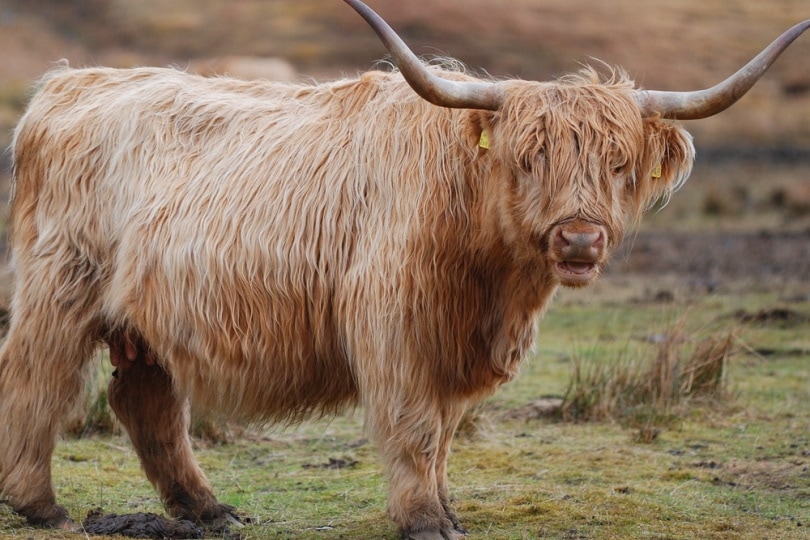
Historically, Highland Cattle have been primarily used every bit a high-quality meat source. Today, Highland Cattle is still associated with loftier quality beef, but the need for high quality beef isn't equally loftier as information technology used to be.
That to the side, Highland Cattle is still primarily used for meat, and high-quality beef at that. After all, the beefiness is very tasty and the animal itself is hardy. In add-on to meat production, Highland Cattle are ofttimes used for showing purposes because of their cute and unique look.
Appearance & Varieties
As we've already touched on, Highland Cattle accept very distinctive looks. The calves are especially cute because they expect almost like teddy bears. Fifty-fifty the adult cattle are super cute because of their long code that cascades over their face and body.
At that place are two varieties of Highland Cattle: Mainland and Isle. Both of these species originated in Scotland, though they were bred in different parts of the country. The Mainland and Island breeds expect very similar, but they take some distinctive differences.
For starters, Island Highland Cattle tend to be slightly smaller considering they had less nutrients on the island. These cattle oftentimes have black coats and longer hair to protect them from the islands' rugged weather condition too.
In comparison, Mainland Highland Cattle tend to be larger because their mainland pastureland had more nutrients. These cattle also come in more colour variations, but the about common are dun and blood-red. Today, many Mainland Highland Cattle have been crossbred with other species.
Even though Island and Mainland Highland Cattle have differences, they still wait very similar since both have long hair, small statures, and large horns. Near amateurs are not able to spot the difference between Mainland and Island Highland Cattle.
Population/Distribution/Habitat
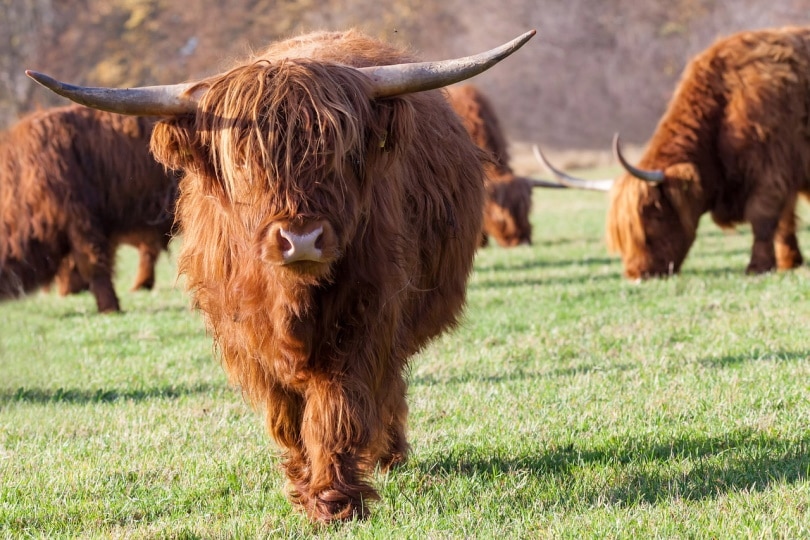
Although Highland Cattle were in one case primarily simply used in the UK, they can now be found across the globe. They are nigh common in Scotland and the U.s., merely these ii countries often export the cattle to other countries.
The six well-nigh mutual countries to observe Highland Cattle include Scotland, Australia, Canada, Denmark, Republic of finland, and the United States. In almost all these countries, the Highland Cattle is bred for meat due to its tastiness and hardiness.
It is estimated that there are over 45,000 Highland Cattle around the globe. This number comes from the 45,000 registered Highlands, but there are likely more than cows and bulls left unregistered.
Are Highland Cattle Brood Good for Minor-Scale Farming?
The Highland Cattle breed is actually a great breed for small scale farming. Because of their smaller stature, they don't need as much space and pastureland to stay happy and healthy.
More so, their hardy nature means that they don't need as much care and concern as more sensitive species. This fact is beneficial for small calibration farmers considering it means you don't accept to worry almost your cattle being overly sensitive to the environment and other factors outside of your control.
Many small-calibration farmers choose Highland Cattle considering they make tasty milk, but they simply cannot produce plenty milk for commercial apply. The amount of milk these cows produce is perfect for modest scale farms, as well as the corporeality of meat you lot can harvest.
In conclusion, the Highland Cattle breed is a favorite among many small-scale farmers. In improver to existence highly bonny, these cows are hardy and produce tasty milk and beef. Peculiarly if y'all live in an expanse with pretty serious rain or weather atmospheric condition, the Highland Cattle breed will exist able to withstand nearly everything.
Adjacent on your reading listing:
- Drakensberger Cattle Breed
- Tuli Cattle Breed
Featured Paradigm Credit: Stevebidmead, Pixabay
Source: https://petkeen.com/highland-cattle-breed/
0 Response to "Characteristics of Highland Cow Breed Characteristics of Highland Cow Beef"
Post a Comment