How Cite Works of Art in Mla Format Two Artist
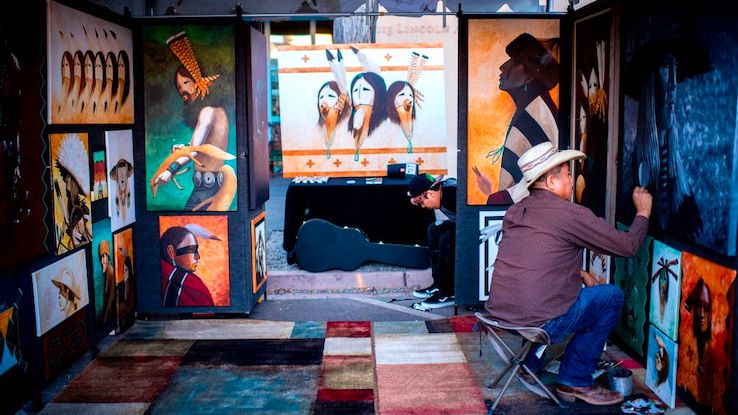
Nov is Native American Heritage Month — a time to elevate Indigenous voices and celebrate the various cultural traditions and histories of Native Americans and Alaska Natives. It's also an of import time to recognize the meaning contributions Indigenous groups take made in enriching the cultural mural of the Us. Visual art is merely 1 of these contributions — 1 that continues to offer a powerful way to express and preserve cultural values and give context to traditions that make each group unique.
To marker this important observance, we're sharing a collection of some of the acme Indigenous artists working in the U.S. today. Each of the creators you're about to come across comes from a different North American tribal nation, and each has developed an individual style worth honoring. While some masterfully carry on traditional art styles and forms passed down past elders, others take developed their own visions of what it means to be Ethnic in modernistic times — and all of their works are expressions of heritage and voices speaking important truths.
Barbara Teller Ornelas
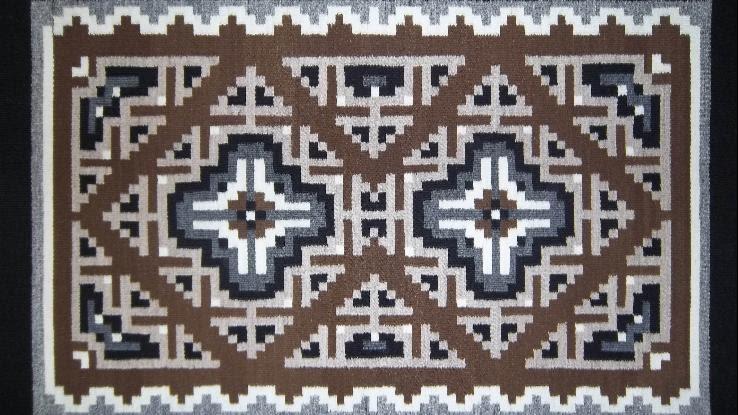
Barbara Teller Ornelas is a 5th-generation Navajo weaver who began learning her traditional art at but viii years former. She grew upwardly in New Mexico's Ii Grey Hills Trading Post aslope her father, who worked there for xl years. Today, she'southward a master of what'south get known as the Two Grey Hills style of weaving, which is recognized for its intricate geometric designs and use of naturally colored wool.
By incorporating both hard-carding and hand-spinning weaving techniques, Teller Ornelas carries on an artform that'south been part of the Navajo cultural legacy for centuries. She and her sister Lynda besides teach weaving workshops to ensure the technique is passed down to future generations.
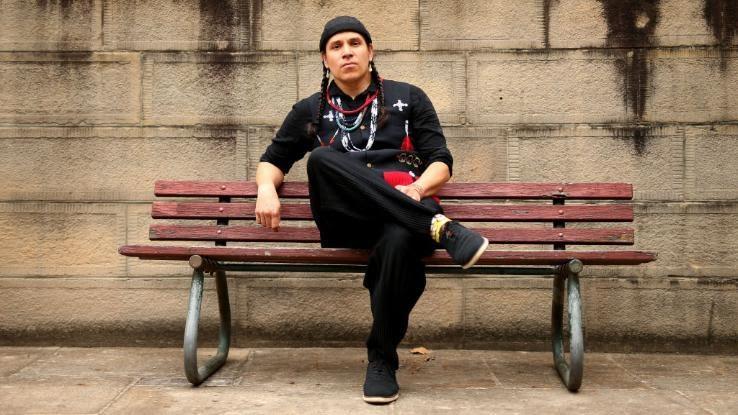
Nicholas Galanin is an artist whose work is refreshingly hard to pinpoint. An Alaskan creator of Tlingit and Unangax̂ ancestry, he expresses himself through sculpture, music, jewelry making and any other technique he chooses to harness to limited what he'southward feeling at the moment. His synthesis of methods exists in function because, for Galanin, both Ethnic art and his personal artistic vision are constantly evolving.
As Galanin himself puts it, "My process of creation is a constant pursuit of freedom and vision for the present and time to come. I use my work to explore adaptation, resilience, survival, dream, memory, cultural resurgence, and connectedness and disconnection to the land." By uniting both traditional and contemporary styles, Galanin's fine art is as fascinating as it is unique.
Duane Slick
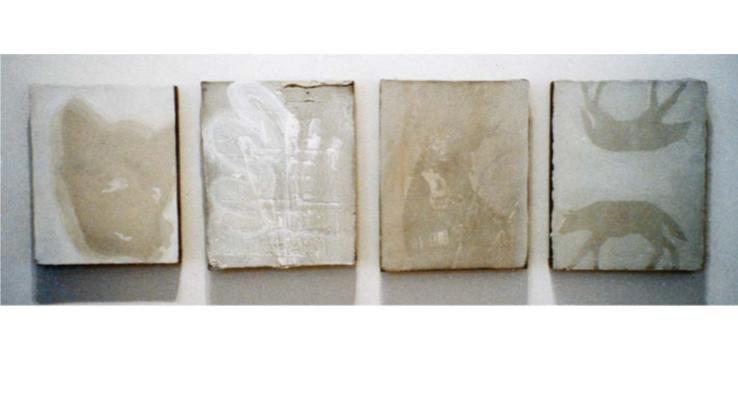
Duane Slick is a painter, instructor and storyteller of Meskwaki descent. One of the things that makes his paintings so unique is his varied selection in canvases — they tend to be glass or linen, both of which make for a visually striking and ethereal issue when combined with paint. He has described his work as "dream paintings whose aim is the exploration of matters spiritual, not physical."
Slick's subjects range from traditional Native American symbols to abstract patterns with realist elements. Not but has his work been widely exhibited, merely he's also been a instructor at the Rhode Isle School of Design (RISD) since 1995.
Teri Greeves
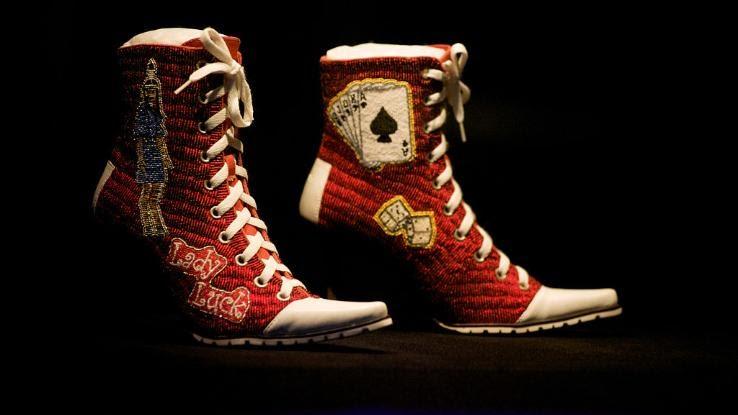
Teri Greeves is an artist of Kiowa descent, and to call her a beadworker doesn't quite cover it. She currently lives in Santa Fe, New Mexico, where she transforms beads into magical works of art on everything from traditional Indigenous-style jewelry to modern shoes.
Greeves learned the art of beadworking from her female parent and grandmother equally a child, and her work has since been featured in magazines, on television set, and in museums and exhibits all over the country. To learn more, take a look at her volume Hearts of Our People: Native Women Artists, which explores both Greeves' process and the extensive contributions and achievements of Indigenous women artists throughout American history.
Frank Buffalo Hyde
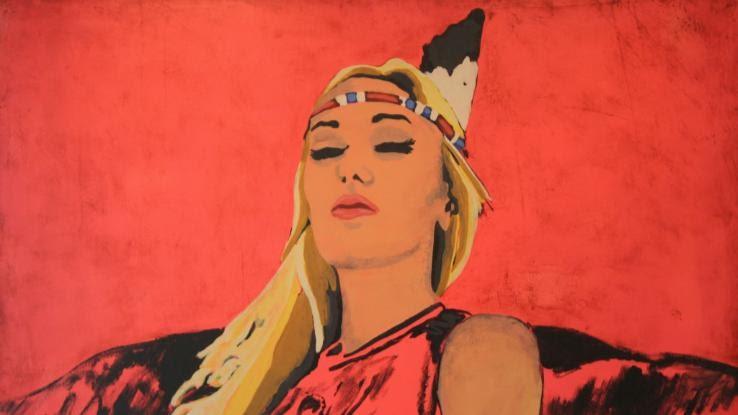
If yous love colorful pieces with a modernistic edge, the fine art of Frank Buffalo Hyde is certain to capture your imagination. A member of the Onondaga Nation, he grew up on a reservation in New York and began exhibiting his piece of work as a hobby at age 18. Hyde ultimately enrolled in the Institute of American Indian Arts, where he decided to plow his passion into a career.
Hyde's work is a mixture of vibrant colors and a style that ofttimes incorporates elements of street fine art with Warhol-esque touches. His subjects range from traditional Ethnic figures to those from popular civilization — and they sometimes embrace a stunning blend of the two.
Starr Hardridge
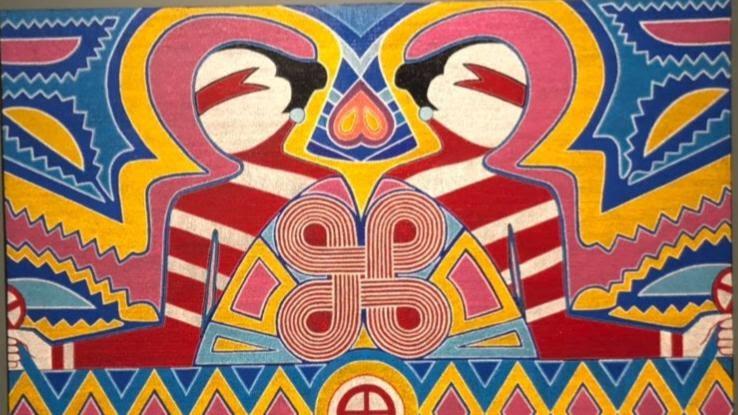
A citizen of the Muscogee Creek Nation, Starr Hardridge was raised in central Oklahoma. His vibrant work is a colorful blend of pointillism and beadwork aesthetic, which makes for a fascinating report in texture. According to his website, his work is "largely inspired by humanity's search for balance inside nature, featuring proud staples of traditional Muscogee mythology and culture."
Hardridge also contributes to a series of paintings he calls "allegorical abstraction," which alloy Native American themes with mod abstract styles and a spectrum of bright, contrasting colors. He's also a talented realism painter — a main of various styles who incorporates "modernistic twist[s] inspired by Muscogee patterns and designs" into each piece in unique ways.
Kay WalkingStick
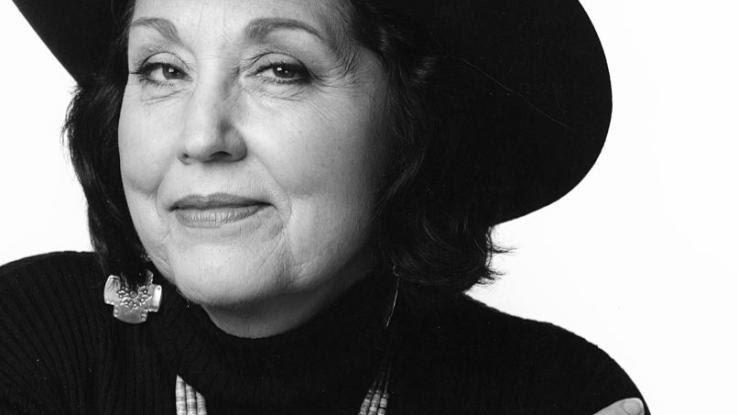
Kay WalkingStick is a member of the Cherokee Nation, and her connection to nature is undeniable in her beautiful landscape paintings. Her more recent works often utilize wood panels as canvases and mix oil landscapes with traditional Southwest Native American designs. By focusing on landscapes, Kay hopes to represent our shared heritage as citizens of Planet World.
"My wish has been to express our Native & non-native shared identity. Nosotros humans of all races are more alike than unlike, and it is this shared heritage, too as my personal heritage I wish to express," she explains in her artist statement.
Nocona Burgess
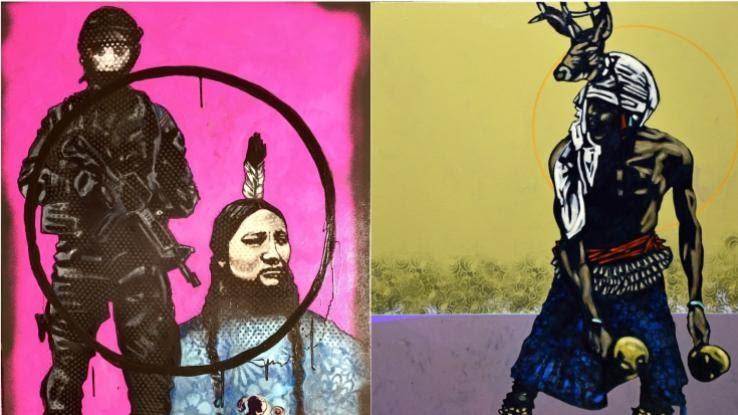
Nocona Burgess is a member of the Comanche Nation and the son of a erstwhile tribal master who can trace his direct lineage back to revered Native American leader Chief Quanah Parker. After growing up surrounded by art — his male parent and grandmothers were creators — Burgess ultimately adult a style all his own.
Much of his work features Indigenous people portrayed in a colorful, mod mode. His portfolio is filled with everything from acrylics on canvass to stencil paintings that blend elements of neo-graffiti with traditional Native American imagery. Burgess' work has been exhibited in galleries around the globe, and several of his pieces are part of the permanent collection of the Smithsonian Institute's National Museum of the American Indian in Washington, D.C.
Source: https://www.ask.com/culture/contemporary-indigenous-artists?utm_content=params%3Ao%3D740004%26ad%3DdirN%26qo%3DserpIndex
0 Response to "How Cite Works of Art in Mla Format Two Artist"
Post a Comment